Crawlspace Reframing: Repairing Structural Termite and Wood Moisture Damage
There's a particular kind of damage that happens quietly under a house, and a crawlspace reframing virginia beach job is usually the only thing that actually fixes it once it's gone far enough. It stays hidden until, one day, out of nowhere, a floor starts bouncing more than it used to. Or a wall cracks in a spot that was fine last year.
Most people don't notice a thing until the problem's already been sitting there for months. Sometimes years. By the time anyone catches on, the wood framing underneath has usually lost a real chunk of its strength, and patching over it at that point just kicks the problem a little further down the road.
Reframing goes after that damage directly. Weakened structural members come out, get replaced, before the issue works its way any deeper into the home. And it's worth knowing this is a different problem than the soil-driven settling covered in our main foundation guide, even though the two show up in the same house more often than you'd think. crawl space foundation repair That guide walks through how structural settling gets diagnosed separately from wood framing damage, which helps a lot if you're not totally sure which one you're looking at.
Reframing is a bigger job than something like encapsulation or a quick joist sistering fix. It's usually saved for situations where the wood has lost too much of its structural integrity to be worth saving at all.
What's Actually Causing the Damage
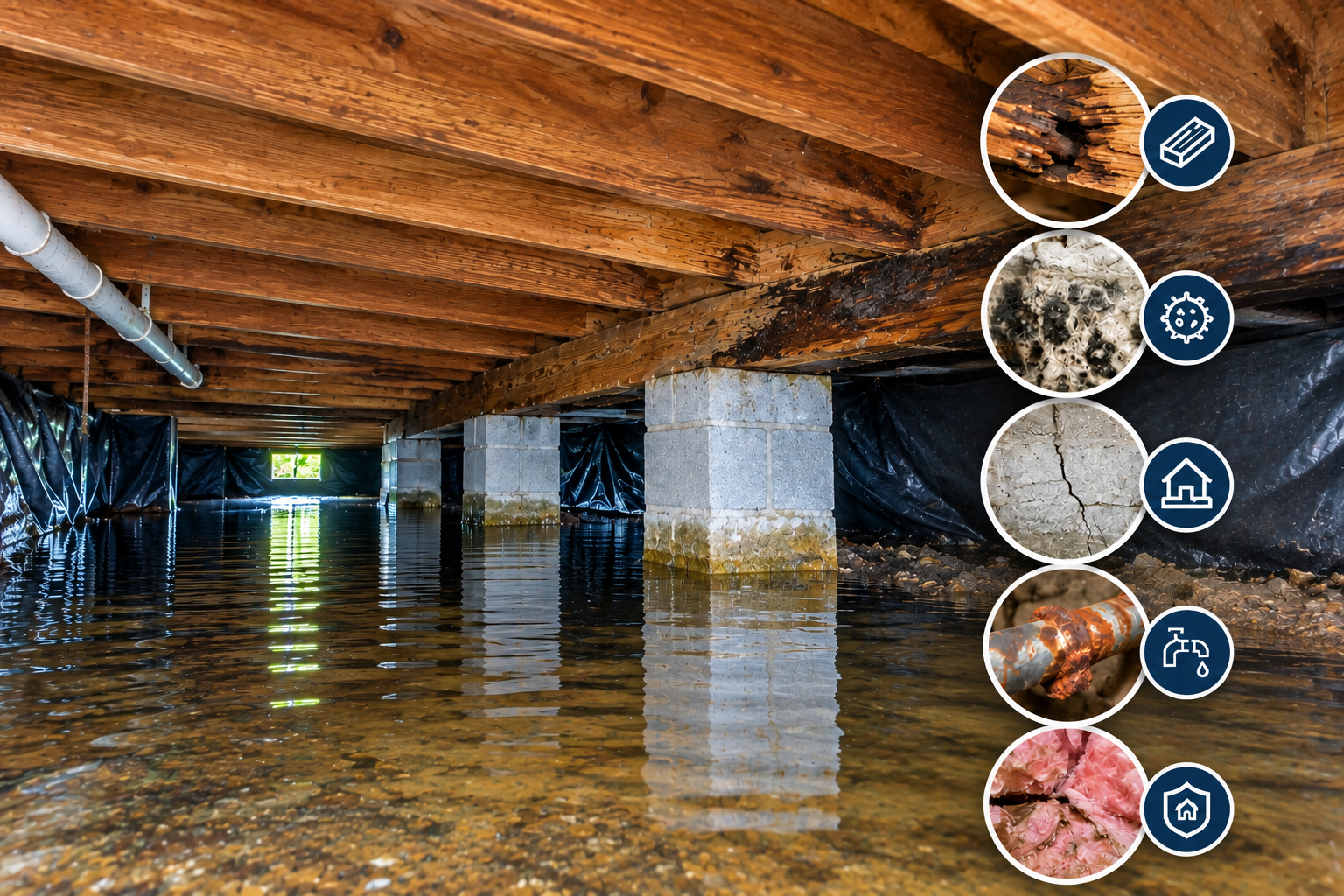
Two culprits keep showing up when contractors inspect crawl spaces across Hampton Roads: subterranean termites, and moisture that's been sitting around too long. Both love the exact same environment, warm, humid, barely any airflow, and both end up chewing through or rotting out the same wood framing that's holding your floor up.
It's not exactly a coincidence that calls for help tend to spike right around when seasonal humidity peaks. That's usually when sagging or springy floors become impossible to ignore anymore. Wood that's been quietly weakening all summer tends to hit its breaking point around late summer or early fall, once heat and moisture have finally done enough damage.
Warning Signs Worth Paying Attention To
- Floors that feel spongy, or bounce noticeably when you walk across them
- Visible sagging in the floor joists, easy to spot looking up from inside the crawl space
- Mud tubes along the foundation walls, a pretty classic sign of termite activity
- A musty smell that just won't go away, even after you've improved ventilation
- Doors or cabinets upstairs that suddenly stop closing squarely
Not every one of these automatically means you're headed for full reframing. Sometimes sistering does the trick, bolting a new support piece alongside one or two damaged joists and calling it done. Other times, especially when termite damage has spread across several structural members at once, there's really no shortcut. That section needs a proper rebuild.
How the Repair Process Actually Works
It starts with pulling out the damaged wood completely. There's no real shortcut here, patching over termite-weakened or rotted lumber just delays a failure that's coming no matter what. New pressure-treated framing lumber, rated specifically for crawl space moisture, goes in to replace whatever came out. Support posts and beams get checked at the same time too, since damage rarely stays contained to a single joist.
Roughly how a typical project unfolds:
- A full crawl space inspection to map out exactly how far the wood damage extends
- Termite treatment first, if there's an active infestation, before any wood gets touched
- Removal of the compromised joists, beams, or support posts
- New pressure-treated framing installed to current code
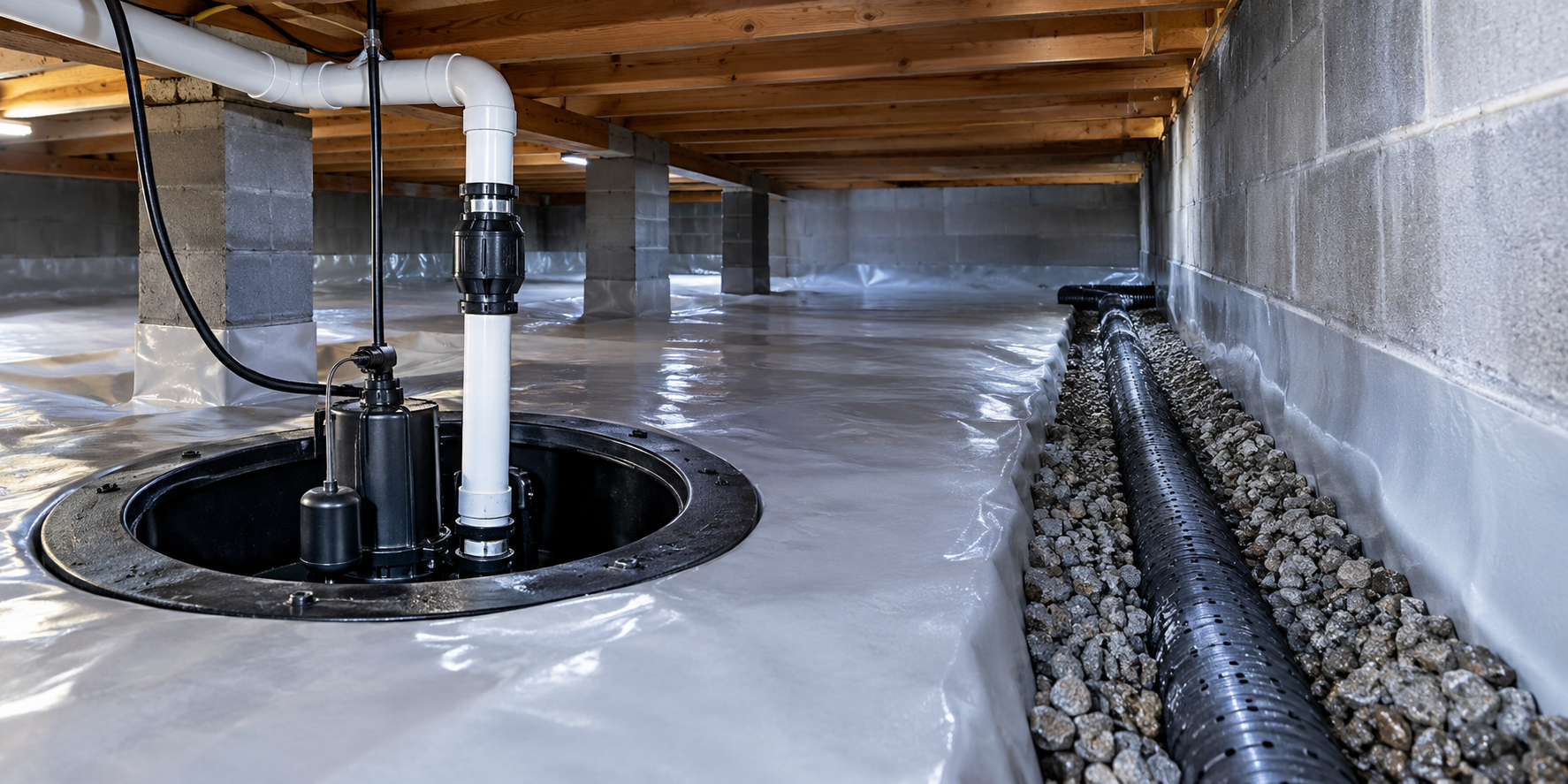
- Moisture control recommendations, so the same thing doesn't just happen again
That last step matters more than most homeowners expect walking in. Ignoring the root cause of the moisture problem - bad drainage, no vapor barrier, or insufficient ventilation - means the very same problems will show up again a few years later.
And then there's the pragmatic aspect of it all, something that people often forget about. The longer framing members are left in place in their damaged state, the more likely it becomes that other areas of the house will be affected by the problem. Plumbing lines travel through the crawl space, but with damaged framing, the plumbing connections begin to come under strain where they weren't supposed to be strained in the first place. HVAC ducts also go through the same area in many houses, and a sagging joist could begin rubbing against the ducts.
What Homeowners Can Do Between Inspections
You don't need to be a contractor to catch some of this early. A quick look through the crawl space access point every few months, especially after a wet season, can turn up warning signs before they snowball into a much bigger repair. Look for standing water, obvious sagging, or wood that looks discolored or feels soft when you press on it. Something look off? Worth getting a professional opinion sooner rather than later. Catching wood damage early almost always means a smaller, cheaper fix down the line.
FAQs
How do I know if I need reframing or just joist sistering?
Sistering works when a joist is only partly compromised and still has enough sound wood to bolt a new support piece against. Reframing becomes necessary once the damage is too widespread for sistering to hold up long term.
Does termite damage always mean I need reframing?
Not necessarily. Early-stage termite damage caught during a routine inspection might only need treatment and some ongoing monitoring. It's usually the more advanced structural damage that triggers a full reframing recommendation.
How long does a crawlspace reframing project typically take?
Depends how far the damage has spread, but most residential jobs wrap up somewhere between a few days and a week, including termite treatment if that's part of it too.
Will reframing actually fix a sagging floor?
In most cases, yes. Once the damaged joists and beams get swapped out for sound, properly supported lumber, that bounce or sag upstairs usually goes away for good.
What stops this damage from coming back later?
Moisture control is really the key piece here. A vapor barrier, better drainage, and adequate crawl space ventilation all work together to deal with the root cause instead of just patching over the symptom.