Managing High Water Tables and Tidal Flooding in Chesapeake, Suffolk, and Cape Charles
There's a specific kind of dread that comes with lifting a crawl space vent cover in Chesapeake the week after a nor'easter rolls through. You already know what you're going to find. Not just wet ground. Wet ground that's been sitting there for days, maybe longer, long after the storm itself is old news on the local weather channel.
Most homeowners across Hampton Roads figure this out the hard way, usually once. And once they do, they start asking why their crawl space seems to hold onto water so much longer than a friend's place two counties inland. The honest answer isn't rainfall. Crawl space moisture problems Hampton Roads Virginia homeowners keep running into come down to something simpler and harder to fix: elevation, tidal pull, and soil that's already saturated before the storm even arrives.
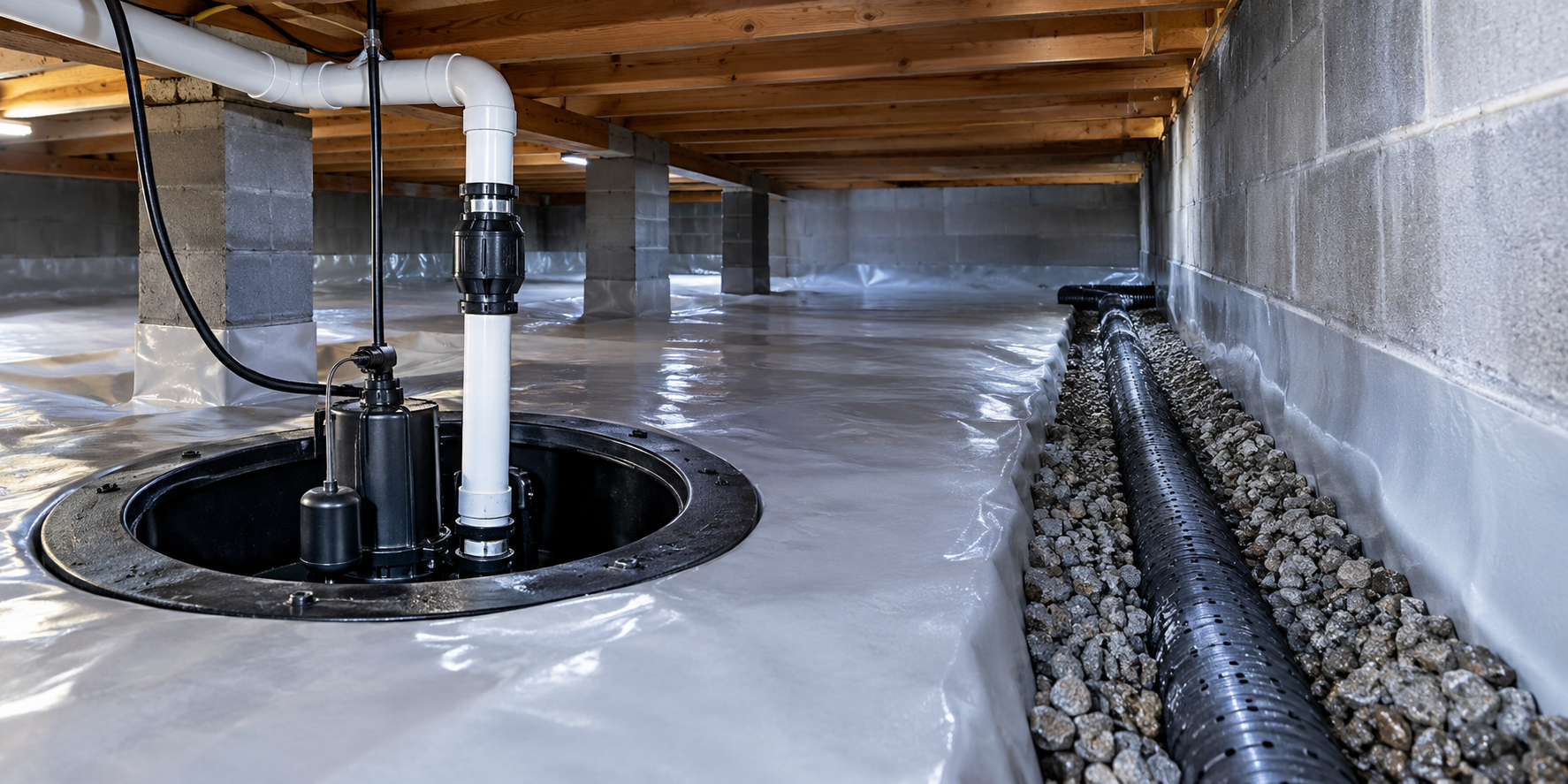
If you want the deeper mechanics on how drainage actually solves this, we've laid it out in our water management systems guide, covering sump setups, French drains, and which one actually fits a given property instead of guessing.
This is something no one tells you until you've experienced it for yourself. A crawl space that is bone dry in July can have two inches of water underneath it in October. And this isn’t because there was an increase in the rainfall; rather, it’s because the ground under it didn’t get a chance to reset.
The Water Table Doesn't Care What the Forecast Says
Around the Chesapeake Bay, in tidal rivers, the water table can lie as shallow as a few feet below the surface. Occasionally, even shallower than that, especially during king tides or when there is an east wind blowing into the Elizabeth or Nansemond Rivers. Add a normal rain event on top of that, and there's simply nowhere left for water to go. The soil's already full. It has to go somewhere, and up into the crawl space is usually the path of least resistance.
A lot of general contractors miss this entirely. They treat a crawl space in the mountains of Southwest Virginia the same as one three blocks from a tidal creek in Chesapeake. Same materials, same approach, same warranty language. Which sounds reasonable until you realize those are two completely different problems wearing the same disguise.
Chesapeake's Tidal Creek Neighborhoods
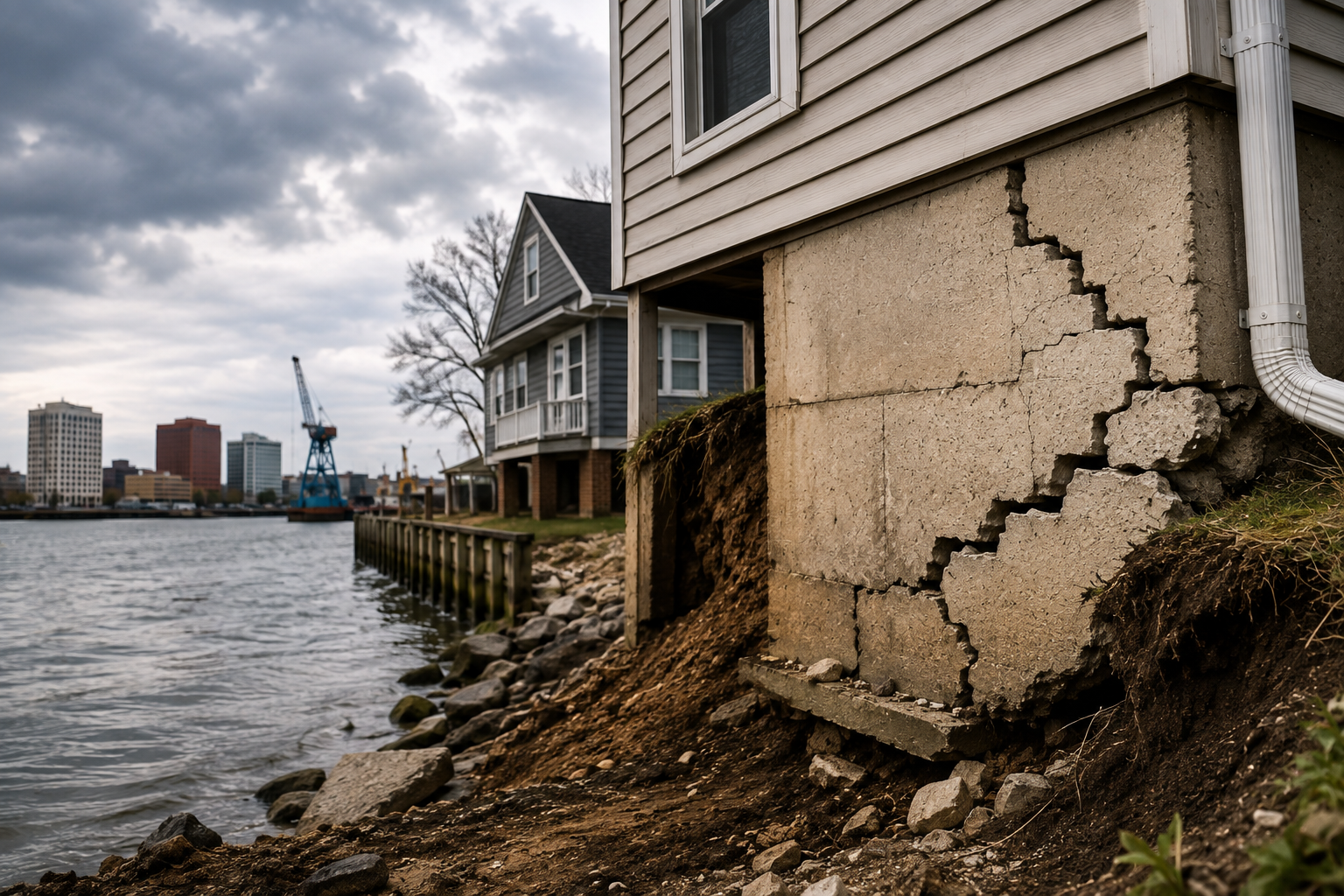
Chesapeake has a lot of older housing stock tucked along the Southern Branch and the smaller tidal creeks that thread through the city. A good number of these homes went up before modern grading codes existed, so their crawl spaces sit at, or barely above, the surrounding water table. Fine on a dry week. Not fine when storm surge or heavy rain nudges the water level up even slightly.
What's strange is homeowners here usually smell the problem before they see it. A musty note drifting up through the floor vents. Subflooring near the exterior walls that feels a little soft underfoot. More bugs indoors than usual, which nobody connects to moisture until someone finally points it out. By the time there's visible standing water under the house, that moisture has often been building for weeks.
Suffolk Looks Easier. It Isn't.
Suffolk throws people off because it looks like it should drain fine. Big open lots, generations of agricultural land management, soil that's been shaped to move water for farming purposes. On paper, that's an advantage.
Except where Suffolk properties sit close to the Nansemond or one of its smaller tributaries, that same flat, open land turns into a liability fast. Water has nowhere quick to go. Runoff from nearby fields and roads pools in low spots, and the tidal push from the river slows down whatever drainage capacity the land would otherwise have. Crawl spaces here often flood from the side, not just from above, and that changes the entire approach. A system built only to catch rainfall off the roofline is not going to help much if the real issue is groundwater working its way in sideways.
Cape Charles and the Sand Problem
Cape Charles is its own animal. Eastern Shore sand drains fast under normal conditions, which sounds like a win until you notice how close the water table sits to the surface near the bay. Sandy soil moves water in both directions, fast in, fast out. So during tidal flooding or storm surge, a Cape Charles crawl space can fill almost as quickly as it drains, and that constant cycling wears down vapor barriers and insulation far quicker than it would somewhere drier and more inland. A barrier that might hold up ten years elsewhere can start failing in Cape Charles after three or four seasons of this.
If you're searching for foundation waterproofing near me because you've noticed this exact pattern, it usually means the fix needs to account for that back and forth cycling, not just a one-time seal job.
So What Actually Works
None of this means homeowners in these three cities are out of options. It means the fix has to match the actual water source on that specific lot, not some generic checklist copied from a national franchise's training manual.
Grading around the foundation needs to genuinely move water away, not just look tidy from the curb. Interior drainage sized for the local water table, not some national average, does more real work here than in most other parts of the state. And a vapor barrier by itself rarely survives sustained tidal pressure. It needs active drainage working alongside it.
Timing matters more than people expect too. Waiting until after a flood to make the call means reacting to damage that already happened. An inspection before hurricane season, especially in Chesapeake's tidal creek zones or along Cape Charles's bay front, tends to catch the small gaps before they become the expensive kind.
Three Cities, Three Different Water Problems
Chesapeake, Suffolk, and Cape Charles all sit on the same coastline, but none of them are fighting the same fight. One deals with tidal creeks pressing in from every direction. One deals with flat land and river tides that just won't move fast enough. One deals with sand that can't decide if it wants to hold water or hand it right back. Figuring out which pattern actually applies to a given property is the real starting point, and it's exactly why a copy-paste drainage plan almost never holds up along this stretch of Virginia's coast.