What Happens During a Free Crawl Space Inspection in Hampton Roads?
We get it. Even the thought of a stranger crawling under your crawlspace can seem weird. If you have booked a free crawlspace inspection or are planning one, we can assure you it’s a simple procedure. During the
free crawl space inspection, a trained inspector assesses the wood, insulation, moisture, and structural foundation of the property. Once the assessment has been done, the inspector explains their findings in simple words. And most importantly, there is no obligation to buy the service.
In Hampton Roads, that look underneath matters more than it does in many other places. Our humidity, high water table, and heavy summer storms push moisture into crawl spaces all year. That moisture is behind most of the problems homeowners notice upstairs, from musty odors to soft floors. Many of those problems are solved by
crawl space encapsulation , and a few point to bigger structural concerns covered in our
foundation repair guide
.
An inspection tells you which, if either, applies to your home.
Here is exactly what to expect, step by step.
Why Hampton Roads Crawl Spaces Need a Closer Look
Virginia Beach, Norfolk, Chesapeake, Suffolk, Hampton, Newport News, and Portsmouth all sit low, close to water, and in a humid climate. Soil under a home stays damp for long stretches, and warm, moist air flows into vented crawl spaces in summer and condenses on cooler surfaces.
Given the topography of the Hampton Roads area, homes here tend to collect moisture. And when that happens, the wood absorbs it, leading to sagging insulation. On top of that, unchecked moisture results in mold and pest issues that cause different concerns altogether. And because nobody checks their crawlspace regularly, these problems slowly start building up for years. And before you know it, crawlspace issues become out of control. Thus, getting a professional crawlspace inspection done on your property even when everything looks fine is essential.
What happens before the inspection?
Before a free crawlspace inspection, you don’t need to do any special preparations. When you reach out to us for an inspection, we will confirm the address and ask you where the crawl space access is.
However, it would be a great help if you could do a few things:
- Make it easier for the inspector to reach the crawl space access point by clearing the path leading to it.
- Let the inspector know what signs they have noticed lately, like high energy bills, pests, peculiar odors, cold floors, or sagging areas.
- Also mention any recent flooding or repairs done on the property.
You don’t need to be home for the entire inspection, but many homeowners like to be present for the walkthrough at the end.
What the Inspector Checks
A thorough inspection looks at the whole space, not just the spots that look bad. Here are the main areas.
Moisture and Humidity Check
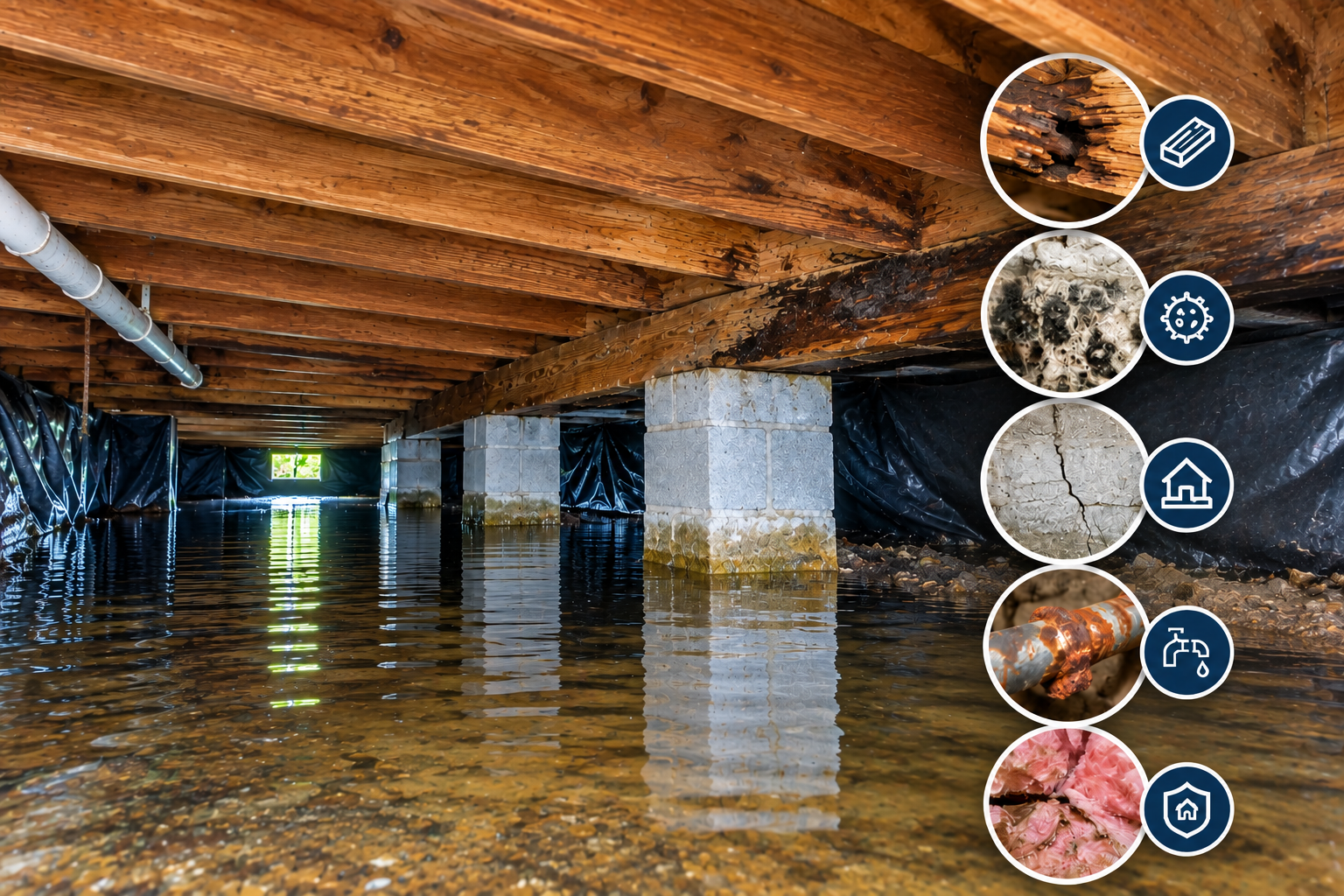
Crawl space inspection starts with a moisture check. The inspector will look for signs like condensation on ductwork and pipes, damp soil, and discolored or wet walls. Another important thing they check for is signs of past water intrusion. To measure the humidity in the air, inspectors use a hygrometer, and for moisture, they use a moisture meter.
Healthy crawl space humidity is generally kept below about 60 percent. Readings above that let mold and wood rot develop, and in Hampton Roads summers, readings well above that are common in unsealed crawl spaces.
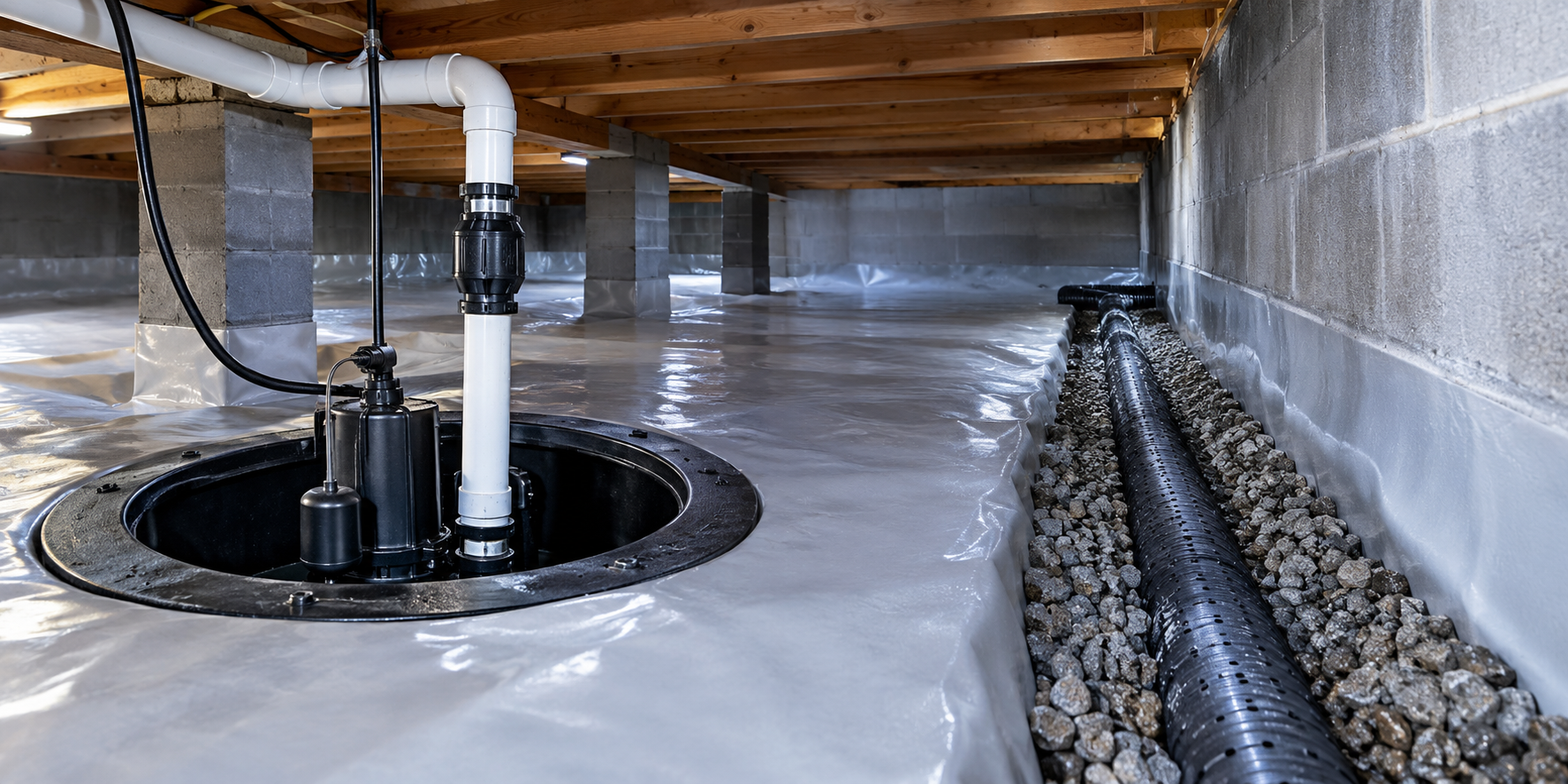
The inspector will also check the vapor barrier, the plastic sheeting over the soil. Torn, thin, missing, or partly covered sheeting is one of the most frequent findings, and it lets ground moisture evaporate straight up into the space.
Wood Damage in Joists, Subfloor, and Sill Plates
After checking the crawlspace for moisture and humidity, inspectors next check wood framing. They will examine floor joists, the subfloor above the joists, as well as the sill plates where the framing intersects the foundation. The purpose of the inspection is to look for signs of mold and fungal growth, soft or crumbling spots, and cracks. Since wood can look fine from the outside, inspectors use various tools to check the firmness of suspected areas.
They also watch for signs of wood-damaging insects such as termites, since damp wood invites them. If anything points toward pests, you’ll hear about it so you can have it evaluated by a pest specialist.
Insulation
Many crawl spaces have fiberglass batts tucked between the joists. In a humid, vented space, that insulation absorbs moisture, gets heavy, and falls. Once it’s saturated, it stops doing its job, holds moisture against the wood, and can become a home for mold and rodents.
The inspector notes whether insulation is missing, sagging, stained, or wet, and whether it’s the right type for the space. Fallen insulation is a clear sign that humidity is higher than it should be.
Standing Water and Drainage
Inspectors don't just check inside the house for signs of damage. They look around the property, along the foundation for water marks, poor drainage, and muddy soil. Even a small puddle of standing water can be a clue to crawlspace damage. Inspectors check gutters and downspouts because if the water is not directed away from the house, it often means it’s getting collected underneath the foundation.
The presence of water, whether standing or surface runoff, can mean foundational damage waiting to happen at any time. Inspection includes a thorough assessment of the water source and how to fix it. Knowing why the water is present in the first place helps in figuring out the best possible solution to fix it.
Structural Elements like Support Posts and Piers
At the end, the inspector assesses structural elements like support posts, piers, girders, and foundation walls. This is done to look for signs like rusted fasteners, shifting posts, crumbling masonry, and gaps between beams and posts.
Since these all make up the structural elements of a house, this inspection checklist overlaps with foundation concerns. Most foundational issues like sagging floors and cracks above windows, etc. can point towards something wrong underneath.
Other Things Noted Along the Way
While underneath, the inspector also typically looks at vents, ductwork, plumbing lines, wiring, and any signs of rodents. These aren’t always the main event, but they affect your home’s comfort, efficiency, and health, so they’re worth a look.
What Happens Next
The outcome of your inspection will usually fall into one of three categories.
Nothing needs to be done. Your crawl space is dry and sound. You’ll get tips on what to monitor, such as gutters, humidity, and seasonal changes, and you’ll have a baseline for the future.
In every case, you decide what happens next. Take the estimate home, compare it, ask questions, and take your time.
When Should You Schedule an Inspection?
Consider booking a
crawl space inspection near me
if you notice any of the following:
- A musty smell in your home, especially on the lower level
- Floors that feel cold, soft, bouncy, or uneven
- Unexplained high energy bills
- Signs of mold, pests, and dampness
- Standing water after flood or heavy rain
- Selling or buying property
Schedule Your Free Crawl Space Inspection
You don’t have to guess what’s going on beneath your home. A free crawl space inspection gives you clear answers, real photos, and honest recommendations, all at no cost and no obligation.
Contact us today to schedule your free crawl space inspection in Hampton Roads. Tell us a little about your home, and we’ll find a time that works for you.
Frequently Asked Questions