
The Ultimate Guide to Crawlspace Encapsulation and Moisture Control in Virginia Beach
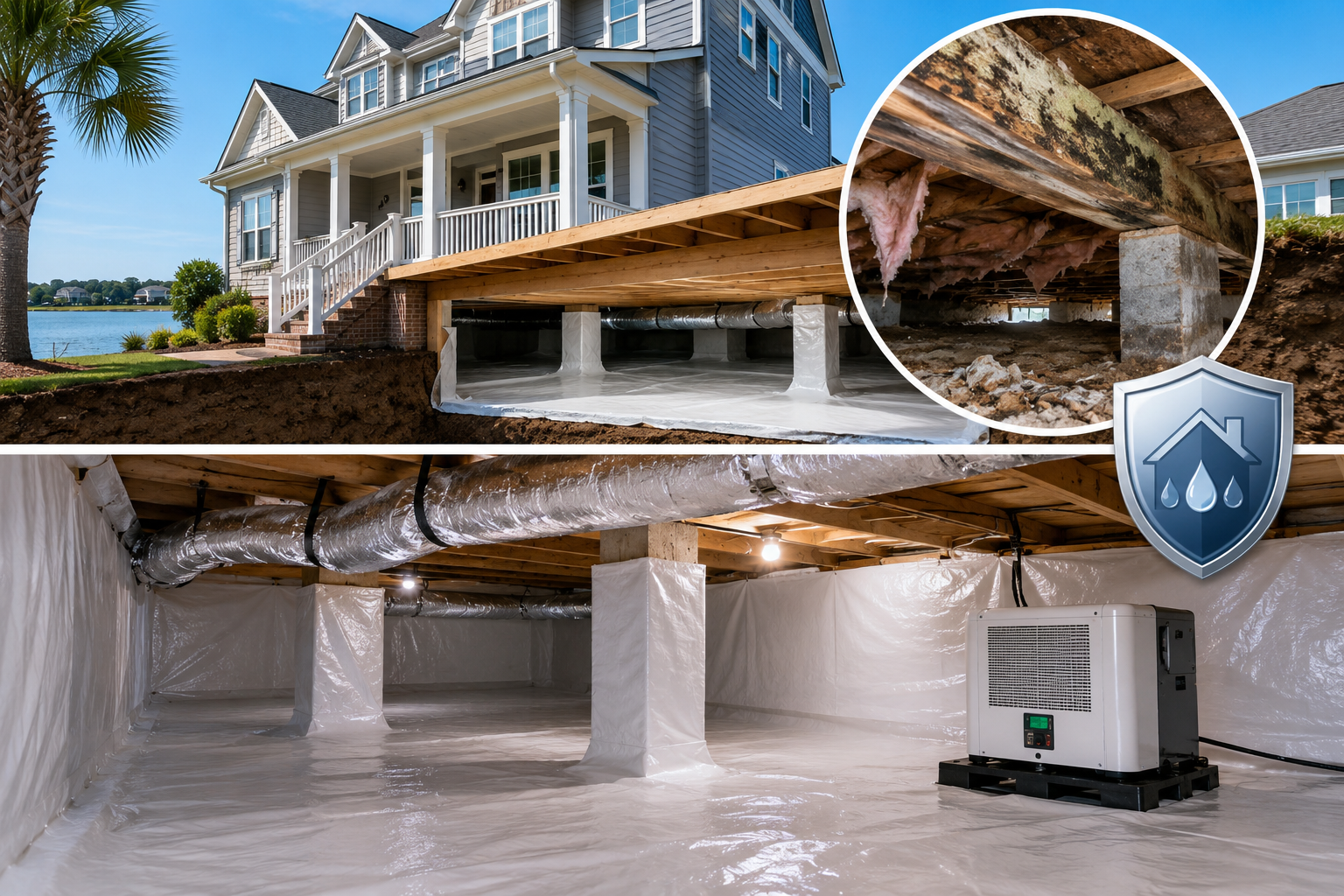
A damp, musty crawlspace is what sends a homeowner searching for crawl space encapsulation Virginia Beach contractors. This is a structural fix, not a cosmetic one. Sealing the crawlspace off from ground moisture and outside air keeps the space dry year-round, protecting the wood, the insulation, and the air quality in the home above it.
In Hampton Roads, homeowners see
crawlspace encapsulation services as an essential restoration process and not an optional enhancement since the soil and climate do not favor vented crawlspace construction. The sandy soil retains moisture. A shallow water table raises the moisture content instead of allowing it to drain off.
This guide walks through what crawlspace encapsulation services include, why this part of Virginia calls for them, and what to expect from a properly done job.
What Crawlspace Encapsulation Services Include
Encapsulation is a way to cover the crawlspace floor and walls with a thick vapor barrier. It seals vents and gaps, and also adds a dehumidifier to control the humidity in the crawlspace. This means the space does not get exposed to air. It becomes closed and controlled.
This is important. The groundwater under a house pushes against the foundation from below. This is called pressure. In places like Hampton Roads, where the water table's high this pressure pushes moisture into the crawlspace all the time. It does not matter if it is raining or not.
Over time this moisture gets into the wood moisture content (WMC) in the floor joists above the crawlspace. The wood moisture content in the floor joists goes up. When this happens the wood starts to soften and lose its strength. This often happens before any rot is visible.
Relative humidity is also a problem. It measures how much moisture is in the air compared to how much it can hold at a temperature. In this region the air in the crawlspace is often very humid. It stays above 70 percent humidity for months. This is when mold growth and wood decay start to happen.
Why Coastal Virginia Soil Makes This Worse
Vented crawlspaces were built on an old assumption: that outside air would dry out ground moisture on its own. That assumption falls apart once the outside air is just as humid as the air already sitting in the crawlspace, which is true for a large part of the year here.
Soil complicates things further. Most of Hampton Roads is covered by sandy topsoil that has a more dense soil strata beneath it which bears the load of the foundation. While sandy topsoil dries quickly during rainfall, it retains moisture for extended periods afterwards.
According to local surveys on soil conditions, the causes remain the same no matter how old or new the house happens to be: a shallow water table and sandy soil are the main causes of excess moisture in crawlspaces of these regions.
This becomes especially noticeable in Chesapeake. The sandy soil of the area retains surface moisture much longer than other soils located further away from the shore. The majority of subdivisions in the region were constructed in former wetlands.
Hampton has to cope with a completely different problem. Neighborhoods near the bay in Hampton experience the nuisance flooding that occurs because the rise of the tide moves water closer to foundations just one foot above grade level.
Poquoson lies on some of the lowest elevation levels in Virginia. The ground is very close to marsh soil and remains wet for the most part of the year, thus keeping crawlspaces humid during dry weather periods also.
Cape Charles, out on the Eastern Shore, deals with sandy coastal soil and direct storm surge. Homes there face slow, steady moisture from the sand and sudden flooding from storms in the same year.
Older Homes Bring Their Own Problems
Soil and weather are only half the story. Many Hampton Roads homes were built before encapsulation was common, and older construction styles bring their own moisture issues.
Norfolk is a good example. Historic brick homes in neighborhoods like Ghent trap moisture against old mortar joints, since brick absorbs and holds water differently than poured concrete.
Portsmouth has a related problem tied to its location near the Elizabeth River. Older homes there sit close enough to tidal water that flooding is a regular concern, not just something that happens during a major storm.
Williamsburg's historic district raises a different issue. Many homes there were built with old-growth timber, which is denser and slower to dry than modern lumber. Once wood moisture content rises in wood this old, it takes much longer to bring back down.
Yorktown shares that colonial brick style, often sitting on dense clay that makes up the load-bearing soil strata below the home. Clay drains slowly compared to sand, so moisture near the foundation has fewer places to go.
One job we see often is an older brick foundation home after a heavy nor'easter, where floodwater gets trapped underneath a crawlspace with no vapor barrier at all. In these cases, the water sits against the brick and wood until it's pumped out and the space is properly sealed.
What a Real Inspection Checks
A crawlspace inspection is more than shining a flashlight around. It takes measurements of moisture levels using a meter, testing wood moisture level at various points along the floor joists, and examining for signs of mold, pests, and structural movement.
An inspection also includes checking the foundation for cracks, evaluating if vents or other barriers help or hurt, and examining grading and drainage outside the building. For structures with brick or wooden (timber) foundations, special consideration is given to mortar joint problems and framing issues, as moisture generally shows its effects there first.
A complete inspection is important since similar square footage does not necessarily mean identical repairs are needed, it can vary also. A newer home in Chesapeake, built on sandy fill, will first need a drainage fix. A historic home in Norfolk with a brick foundation will need moisture management mostly done on the foundation walls.
Signs Your Crawlspace Needs Attention
Most people do not think about their crawlspace until something upstairs feels off. Here's what to look for:
- A musty smell that gets stronger near the floor
- Rooms that feel humid even with the AC running
- Mold or mildew on the floor joists, insulation, or subfloor
- Wood that feels soft or spongy underneath the house
- Floors upstairs that sag or feel uneven in spots
- More bugs or rodents than usual
- Water beading on pipes or ductwork in the crawlspace
- Energy bills that climb for no clear reason
If several of these sound familiar, it's worth having the space checked before the problem spreads further into the house.
Not sure if what you're noticing is normal or worth a closer look? Here's
why your crawlspace smells musty and what it usually means.
→ Concerned about what you're seeing?
Schedule a crawl space encapsulation inspection
with Coastal Crawlspace Solutions.
What Goes Into Professional Crawlspace Encapsulation Services
No two crawlspaces look the same, so no two jobs are exactly alike. Most full encapsulation jobs include the following.
Vapor Barrier
A thick, durable barrier covers the entire floor and runs up the foundation walls. This is the main defense against hydrostatic pressure pushing ground moisture into the crawlspace.
Sealed Vents and Gaps
Gaps like foundation vents and pipe openings that allow the entry of outdoor air are sealed off. This is the process whereby a vented crawlspace becomes an encapsulated crawlspace.
Dehumidifier
This should be of the right size to regulate the level of humidity all year round. This is important in situations where the wood moisture content is relatively high, as this will help reduce it.
Drainage
Where there is presence of standing water or a very low water table. Drainage materials like drainage matting, French drain or even a small sump pump may be required to move water away from the crawlspace rather than having it near the barrier.
Insulation Work
Depending on the home, insulation is added back in or repositioned, both to help with energy use and to prevent moisture from building back up under the floor.
The Encapsulation Process
Most projects follow the same four steps, whether the house sits on sandy fill in Chesapeake or a historic brick foundation in Norfolk.
- Inspection — A technician examines moisture levels, checks for mold or wood damage, and looks at the foundation for cracks or drainage problems that need addressing first.
- Preparation — Old debris and worn insulation are cleared out. Any mildew is treated before installation begins. Drainage work, if needed, happens at this stage.
- Installation — The vapor barrier goes down, is sealed at every seam, and runs up the foundation walls and across the support piers. Vents are sealed, and the dehumidifier is installed and set to maintain a constant humidity level.
- Final Walkthrough — The completed space is checked once more to confirm the seal is tight, the dehumidifier is working, and nothing was missed.
Most jobs take one to a few days, depending on the size of the crawlspace and how much prep work it requires.
Vapor Barrier Alone Versus Full Encapsulation
A basic vapor barrier is loose plastic laid across the floor. It isn't sealed at the seams, doesn't run up the walls, and does nothing about humidity in the air. Full encapsulation treats the whole space as one system.
| Feature | Basic Vapor Barrier | Full Encapsulation |
|---|---|---|
| Floor coverage | Yes | Yes |
| Seams sealed | Rarely | Always |
| Wall coverage | No | Yes, up to the sill plate |
| Vents sealed | No | Yes |
| Humidity control | None | Dehumidifier included |
| Typical lifespan | 2–4 years | 10+ years |
| Best suited for | Short-term budget fix | Long-term protection |
For most homes here, a basic vapor barrier can't keep up with what sandy soil and a high water table produce year-round.
What Homeowners Notice After Encapsulation
- Cleaner indoor air. A meaningful share of a home's indoor air comes up from the crawlspace, especially in older houses. Sealing out mold and damp air improves air quality upstairs.
- Lower energy bills. An HVAC system doesn't work as hard once it's not fighting damp air under the house. Many homeowners see a real drop in bills within the first year.
- A stronger structure. Wood rot, warped subfloors, and rusted fixtures all trace back to moisture over time. Encapsulation stops that damage before it starts and keeps wood moisture content from climbing back up.
- Fewer pests. Termites, roaches, and rodents are drawn to damp, dark spaces. A dry, sealed crawlspace removes that draw.
- A stronger resale position. An encapsulated crawlspace, with documentation to back it up, tends to read as a real upgrade to buyers in a coastal market where moisture is already a known concern.
How an Unsealed Crawlspace Affects Ductwork and HVAC Systems
Homes are constructed in such a manner that the HVAC ductwork is always built inside the crawlspace. In situations where there is moisture present in the crawlspace, the HVAC ducts sweat, the insulation can be damaged and the HVAC ducts end up absorbing in humid air.
The HVAC will have to put in more effort to get to the desired temperature and this will show in the increased electricity bill. Moisture in the HVAC ducts will facilitate the development of mold directly in the airflow channel, something that many people are unaware of in their homes. Failure to address this issue will see the increase in the wood moisture content.It destroys the structure of the ductwork just as it does to the floor joist. This is where crawlspace moisture and
foundation repair concerns start to overlap.
However,
crawl space encapsulation Virginia Beach eliminates this problem source completely. Ductwork within a sealed and dehumidified crawlspace will remain dry, which relieves stress on the HVAC unit and keeps mold from growing in the ducts themselves.
Costing Factors
The cost varies according to the crawlspace size, condition, and any other work such as drainage or repairs that might be required. A crawlspace which currently suffers from mold or water problems will take longer and therefore cost more to remedy than a crawlspace which just requires sealing and a dehumidifier installed.
Some older homes may have brick foundations or old-growth wood structures where further preparation is necessary prior to the installation of a vapor barrier system.
That adds to the cost but keeps the encapsulation from failing early, homes in Yorktown and Williamsburg, where colonial brick and old-growth timber are common, often fall into this category.
Square footage alone doesn't determine the price. An in-person inspection is the only reliable way to quote a job, since soil conditions and existing damage vary significantly between homes in this region. Two homes on the same street can require very different amounts of labor depending on how the original foundation was built and how much moisture has already gotten in.
If cost is a concern,
financing options are available to help spread the expense of a full encapsulation over time: call our team to discuss what fits your project.
For a full cost breakdown by crawlspace size and condition, see our
Crawlspace Encapsulation Cost Guide for Hampton Roads Homeowners.
Why a Licensed Class A Contractor Matters Here
Crawlspace encapsulation services touches your home's foundation, which is why licensing matters more here than for a smaller job. In Virginia, a Class A contractor license has certain requirements concerning experience, finances, and exams to be fulfilled.
Employing an individual with the appropriate insurance and license ensures that the project meets some standard, which will save you if something unexpected comes in the middle of the project. Another advantage is that only one company will deal with all problems related to drainage, structure, and moisture.
Common Myths About Encapsulation
Myth: You only need it if mold is visible. The moisture content of wood and humidity in the room can be high long before the mold will appear.
Myth:
Dehumidifier is enough. If there is no closed barrier and no closed vents, the dehumidifier works against moisture that keeps appearing inside the space.
Myth: Encapsulation traps moisture inside. Encapsulation traps moisture inside. When performed properly, encapsulation removes moisture from floors and outside air, and manages the rest of humidity with a dehumidifier. The result is a drier space, not a sealed-in damp one.
Myth: Old buildings cannot be encapsulated. The condition of foundation and framing is much more important than the age of the building itself. Even historic buildings with brick walls and old growth timbers can be encapsulated after addressing current issues.
Myth: It's just cosmetic. The true benefit of encapsulation lies in the prevention of wood rot, pest infestation, bad air quality, and increased energy bills.
Myth: All vapor barriers are of the same thickness. Barrier materials differ a lot in terms of thickness and durability. A thin barrier can tear during routine crawlspace access, undoing the seal within a year or two.
How to Choose the Right Company
- Licensing and Insurance — Confirm the contractor holds a real Class A license in Virginia, since this work touches the structural foundation of your home.
- Local Experience — A company that regularly works around coastal Virginia understands the local soil, tidal patterns, and building styles in a way an out-of-area contractor usually doesn't.
- Inspection Before Pricing — A reliable contractor inspects the crawlspace in person before quoting a firm price. Be cautious of anyone pricing a job sight unseen.
- Clarity on Materials — Vapor barrier thickness, dehumidifier size, and drainage components all vary in quality. A good contractor explains what they're using and why it fits your space.
- Warranty — Since this work is meant to last, ask what warranty comes with it and whether the company offers any follow-up check.
Signs of a Poorly Done Job
A vapor barrier that isn't sealed at the seams, or doesn't run all the way up the foundation walls, leaves gaps for moisture to return. Vents that are only partially sealed cause the same failure over time.
An undersized dehumidifier cannot cope especially during hot summer days. Water could accumulate below the vapor barrier if the drainage was not taken care of before installing the barrier.
For old houses with brick walls or wood framing, a rush could result in not addressing any problems such as damage to the mortar joints or framing. Thus trapping moisture in the crawl space below a barrier that seems sealed on the surface but does not provide protection for the structure.
Resale and Insurance Considerations
Crawlspace moisture, mold, and damage to wood is a common issue highlighted by home inspectors during home resale inspections. It can either impede a resale process or negotiate the price down, but a properly encapsulated crawl space with all documents in order can be a positive point when reselling.
As for the insurance coverage, ongoing moisture damage and mold growth can be often excluded from homeowners policy, so prevention costs less than remediation.
Homeowners refinancing or applying for certain loan programs may also run into appraisal requirements tied to crawlspace condition, especially in older homes with brick or timber foundations. Documentation from a licensed contractor can help meet those requirements ahead of time instead of causing delays during the appraisal.
Maintenance After Encapsulation
Make certain that the dehumidifier is operating well and drains water as needed. Also check the vapor barrier for harm from saved gadgets, rodents, and others every now and then.
Keeping gutters clean and appropriate land grading around the house will limit the water flow into the crawlspace. Annual maintenance and inspection of barriers, seals, and dehumidifiers could help you avoid spending extra money on a problem that might become bigger in the future.
Properties located near the tide waters, such as Portsmouth, Hampton, and Poquoson, have to undergo an annual check after each storm, whether the system works fine or not. Heavy rains or storm surge will definitely influence the drainage system of the foundation in some way.
Best Time of Year for This Work
Late fall to early spring is much easier because humidity level is low and there is no still water remaining from the summer. However, problems related to moisture or mold have to be addressed immediately rather than waiting for the "ideal" season.
Questions Worth Asking Before Hiring
- Is the moisture a product of the humidity or poor drainage system?
- Have they checked whether there are molds or other structural damages?
- Is the price they have quoted inclusive of vapor barrier, dehumidifier, and drainage systems?
- What makes the warranty invalid? Is it transferable when the house is sold?
- Have the contractors previously worked on brick or timber-framed houses earlier?
- Does the company provide follow-up services or do they do it once only?
Is a DIY Fix Ever Enough?
The material used to create the vapor barrier is available in almost every hardware store and the task of installing it on the floor level is not particularly hard. However, proper sealing of every joint, proper sealing of the ventilation system, and sizing of the dehumidifier require much skill.
A DIY job done without proper attention to details will have to be redone within a year or two and will cost more than a professional job initially. If you need a quick fix then DIY might work; if you want a long-term solution then professionals are recommended.
What a Warranty Should Cover
Not all warranties mean the same thing. Some only cover the vapor barrier material itself, while others cover the entire system, including the dehumidifier and any drainage work installed alongside it.
Before signing anything, ask what voids the warranty and whether it transfers to a new owner if you sell the house. A transferable warranty can be a real selling point later, in a market where buyers already ask about crawlspace condition.
It's also worth asking how long the company has been doing this specific kind of work in the area. A warranty is only as good as the company standing behind it years down the road.
Frequently Asked Questions
How long will crawlspace encapsulation last?
A well-installed system will work for ten years or even longer with simple maintenance procedures, depending on the quality of the materials used and maintenance of the dehumidifier.
Do I really have to do encapsulation if there's no sign of wetness in the crawlspace?
A crawlspace might appear to be dry, but there may be quite high humidity in the air that can only affect wood moisture or air in the house. The best thing to do in this situation is to conduct an inspection.
Can encapsulation help get rid of musty smells inside the house?
It can do that in almost all cases because most of your indoor air is taken up from the crawlspace and encapsulation will eliminate mold and moist air from its source.
Is there any use of the dehumidifier when the crawlspace is already sealed?
Yes, sealing the space prevents moisture from entering, but the dehumidifier controls humidity in the air, which is especially important in the coastal climate.
How disruptive is the process to day-to-day life at home?
Not very much. As mentioned before, the process takes place underneath your house, not within the living areas. Therefore, most people continue with their lives normally during this process.
Could encapsulation help to lower humidity levels in your entire home?
Yes. This is because the air in your crawlspace travels upward into the home. Encapsulating the crawl space will reduce humidity levels in the entire house.
Protecting a Home Starts Below the Surface
Though hard to see from outside the house, the crawlspace directly impacts your home. What goes on underneath the home reflects upstairs in various ways.
If you are noticing mustiness, higher humidity levels, or simply trying to understand what is going on under your floors, a professional inspection is the way to go. Coastal Crawlspace Solutions Inc. works with homeowners around Virginia Beach, Norfolk, Chesapeake, Portsmouth, Hampton, Poquoson, Williamsburg, Yorktown, Cape Charles, and the greater Hampton Roads areas to inspect, insulate, and protect their crawlspaces in our unique coastal environment.
→ Schedule your free inspection today.